We are pleased to announce the winners of ASQ’s two annual article awards. The ASQ Award for Scholarly Contribution recognizes an article published five years earlier that has subsequently had the greatest influence on the field of organization studies. The ASQ Dissertation Award recognizes an article published in the previous year based on a dissertation, with the lead or sole author being the dissertation author.
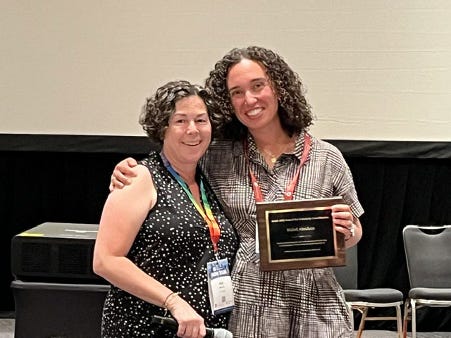
The 2026 ASQ Award for Scholarly Contribution goes to Mabel Abraham for “Gender-role Incongruity and Audience-based Gender Bias: An Examination of Networking among Entrepreneurs.”
The committee found this to be an elegant and timely study that helps unpack the persistence of gender inequality in our society. It spotlights the critical effects of audiences or third parties by showing that referees’ concerns for self-presentation forcefully shape dynamics that perpetuate gender inequality. The study leverages unique longitudinal data from a widely used networking organization whose purpose is to help entrepreneurs grow their businesses by exchanging resources about potential clients. The article’s design is rigorous, the match between the question and the data is exact, and its results are convincing and powerful. Moreover, the article conveys implications for contemporary society. In an era when leaders and organizations pre-emptively take actions to assuage powerful people or entities (i.e., third parties), the study reminds us that such anticipatory behavior has real-life implications that can breed continued inequality.
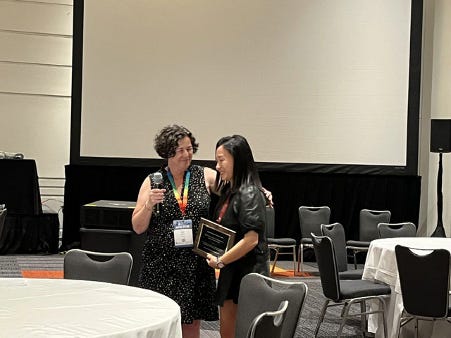
The 2026 ASQ Dissertation Award goes to Siyin Chen, Marlys Christianson, and Chen-Bo Zhong for “Art for Whose Sake? Managing Professional Autonomy and Empowered Clients in the Porcelain Capital of China.”
This article addresses a fundamental and unresolved question in both the creativity and professions literatures: How do professionals preserve their autonomy when working with clients who lack their expertise? This question is grounded in fieldwork in China’s Jing De Zhen porcelain community. Drawing on diverse materials and methods, including analysis of the creative products observed in studios and markets and captured through photographs, the authors meticulously trace changes in creative work over time. The committee commended this article for showing “a level of transparency and detail that will serve as an exemplar for future qualitative research” and for developing “a clear, tightly integrated set of theoretical constructs while also drawing on foundational sociological scholarship, consistent with ASQ’s intellectual heritage.”
The runner-up for the ASQ Dissertation Award is Anna Kim for “Harambee! A Triadic Perspective on Social Impact: Organizations, Evaluators, and Target Beneficiaries in Kenya.” At the heart of this article’s effort to address an important challenge in development organizing is a novel theoretical move: By reconstituting accountability in social impact initiatives as a triadic relationship among organizations, evaluators, and target beneficiaries (rather than the conventional dyadic framing), Kim gives theoretical standing to communities that are rarely treated as agentic actors in these systems. The committee was struck by the moral weight and societal significance of the question the article takes on, as well as the methods brought to bear. Featuring research conducted in Swahili and grounded in years of fieldwork in Kenya, this sole-authored article sets a high standard for empirical rigor and scholarly ambition.
ASQ seeks papers that engage the theoretical and empirical literature on organizations and make significant contributions to it. The editors interpret this as papers that open up scholarly conversations and inspire research through their theoretical and methodological advances, papers that will be studied and built upon, and papers with conclusions that will be tested, re-tested, and found to hold true. Our award winners fulfill these criteria, demonstrating ASQ’s commitment to research that combines significant theoretical advances with extensive data collection and rigorous analysis. They do so while simultaneously illuminating the opportunities and challenges of tackling important organizational and societal problems.
Two committees, comprising members of our editorial board, review the articles published during the target years and choose the winners. This year’s ASQ Award for Scholarly Contribution Committee was chaired by Michel Anteby and composed of Daisy Chung, Ming D. Leung, and Kate Odziemkowska. The ASQ Dissertation Award Committee was chaired by Mandy O’Neill and composed of Stefan Arora-Jonsson, Sarah Harvey, and Danqing Wang. We thank the committee members for the time they dedicated to reading and deliberating on the contenders and selecting these excellent articles for recognition.
The Winner of ASQ’s 2026 Photo Contest!
In April, we invited our readers to submit photos for this year’s photo contest. We’re excited to announce that the winner is Jeroen Struben, who captured this ethereal image of a wintry tree in Charnay, an area in the Rhône department of southeastern France. The image will appear on the cover of ASQ’s December 2026 issue.
Thank you to everyone who participated (and know that we may also want to feature one of your submitted photos on a future ASQ cover!).